

Hatt Clinic
September 27, 2017
May 01, 2026
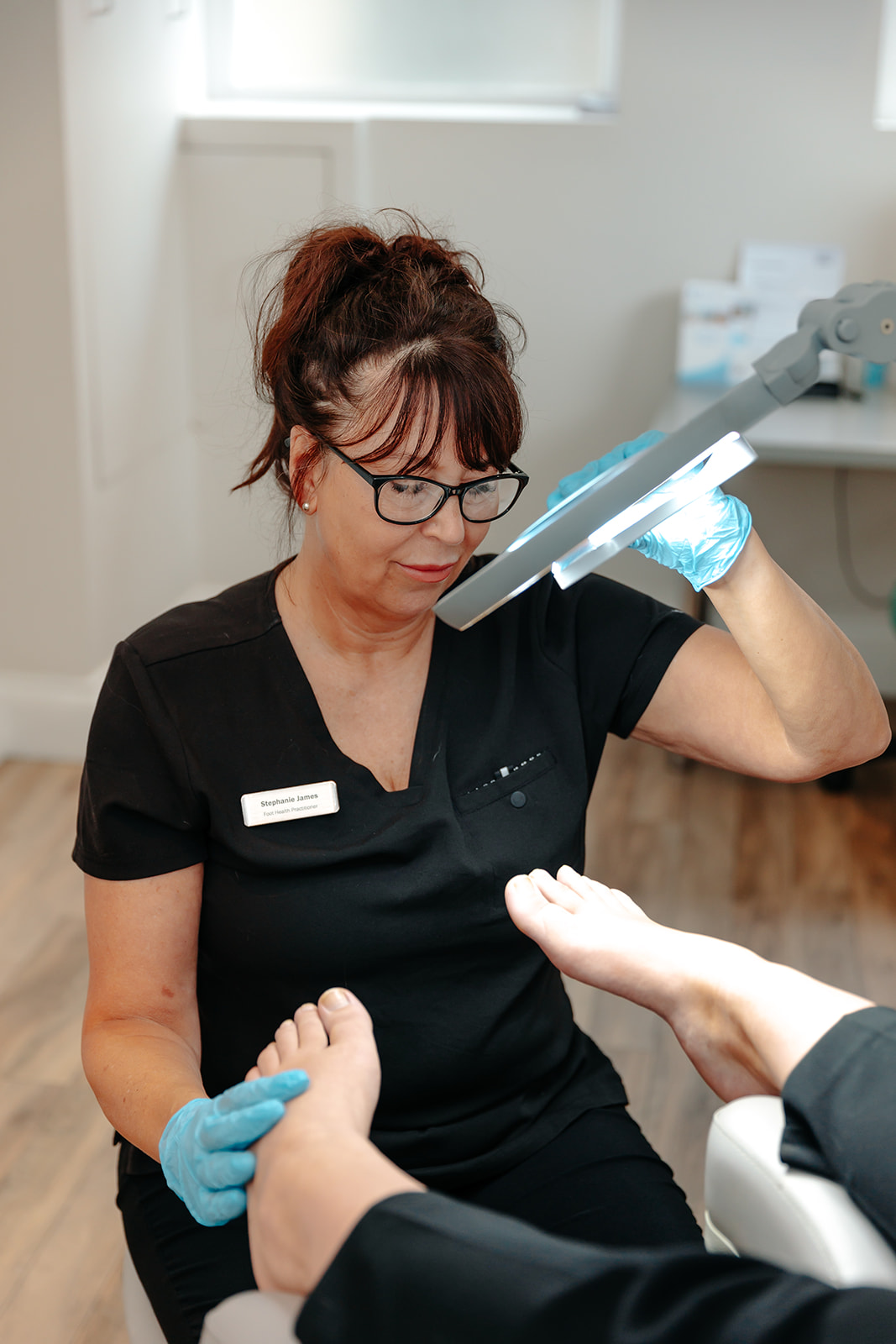
Fungal nails are fingernails or toenails that have been infected with a fungus.
Over time, the nails become thickened, discoloured, and brittle.
They usually turn white, yellow or brown. And they become prone to splitting, breaking, and crumbling, leaving the skin underneath them open to infection.
On the feet, the condition typically affects the nail on the big toe, but the other nails can also be infected.
Fungal nail infections are caused by contagious fungi, which infect the nail by entering through tiny cracks in the surface.
The most common cause of fungal nail infections are dermatophytes. These fungi also cause athlete’s foot: a contagious skin infection which, if left untreated, can spread to the toenails.
Like all fungi, dermatophytes thrive in warm, damp conditions. For example, you’ll be more at risk if you wear non-breathable footwear that makes your feet sweat. And if you don’t dry your feet properly after bathing or showering.
There’s also a risk of contagious infection if your skin makes contact with infected surfaces. This can happen if you walk barefoot in shared spaces, like communal showers or swimming pool changing rooms.
No. Fungal infections, like athlete’s foot and fungal nails, usually only get worse without treatment. In the most severe cases, the infected toenail may need to be permanently removed.
The best thing to do is seek treatment at the first sign of athlete’s foot or when you first notice changes in your nails.
You’re more likely to get a fungal nail infection if you:
You should see your GP if you have a fungal nail infection and:
There are a few ways to treat a fungal nail infection.
Most people start by visiting their pharmacist for an over-the-counter antifungal treatment. Typically, these are applied directly to the infected nails, either daily or weekly, over 6-12 months.
If the over-the-counter treatment doesn’t work, your GP can prescribe antifungal tablets. This treatment can take up to six months, but it’s not suitable for everyone and it has some unpleasant side effects.
If you’re looking for the best fungal nail treatment, Hatt Clinic’s podiatrists recommend Clearanail.
We believe Clearnail is the best treatment for a fungal nail infection because:
Clearanail is an advanced antifungal treatment, which is provided by a podiatrist in a foot clinic.
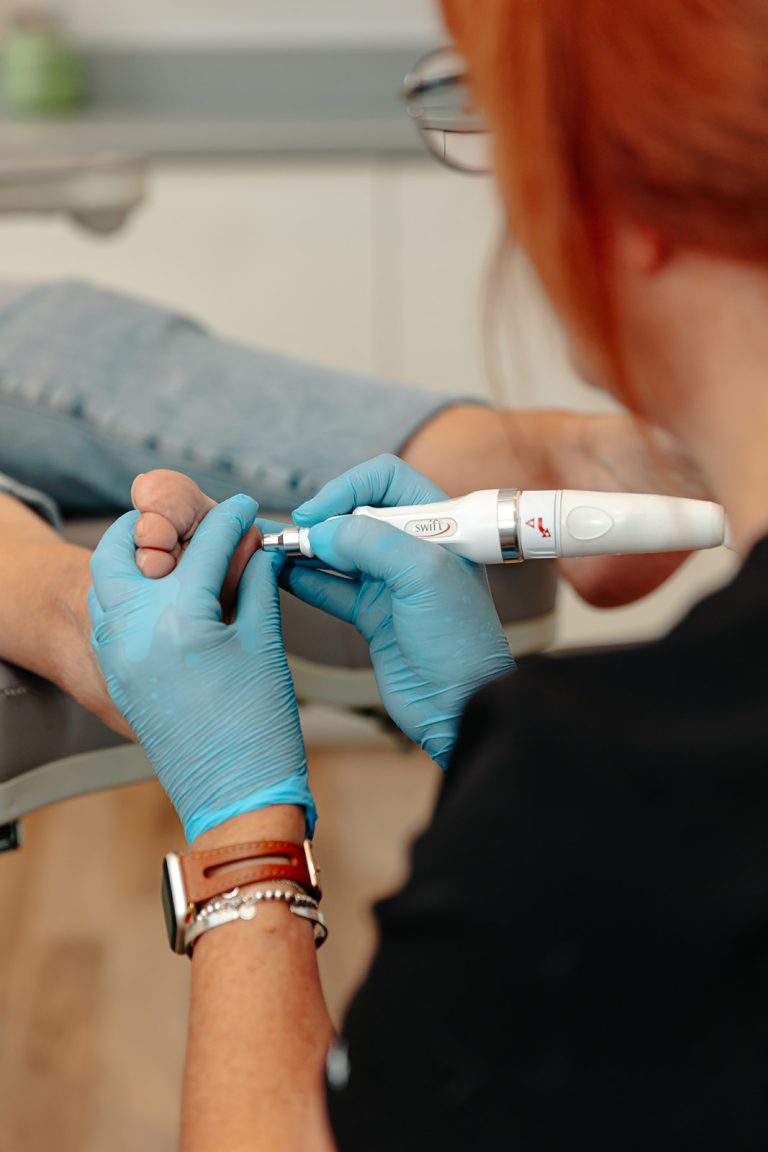
The treatment starts with in-clinic session, which involves micro-drilling the infected nail with tiny holes. You’ll then be given an antifungal spray to apply.
The holes allow the spray to penetrate deep into the nail, where it will be most effective.
The treatment comprises two 30-minute micro-drilling appointments and three 15-minute follow-up appointments over a period of 32 weeks.
In practice, that looks like this:
The follow-up appointments are to check the new nail growth is healthy and with no signs of fungus.
Clearanail works best on mild to moderate fungal nail infections.
If the infection is more advanced, your podiatrist may recommend Clearanail is used alongside a course of antifungal tablets prescribed by your GP.
If you have a fungal nail infection — or you have athlete’s foot and you’re worried it might spread to your toenails — it’s best to get the treatment you need straight away.
You can book an appointment with a podiatrist at all three of our clinics, in Devizes, Frome and Marlborough.
If you have athletes foot or a fungal nail infection, but feel too embarrassed to see a podiatrist, this article should give you the reassurance to book an appointment and get the treatment you need.
To book an appointment online, visit our online booking page and select initial chiropody/podiatry from the menu.
Alternatively, you can email us at: enquiries@hattclinic.co.uk
Or call your nearest clinic:
Devizes: 01380 730473
Frome: 01672 516580
Marlborough: 01373 452604
Hatt Clinic
September 27, 2017

Hatt Clinic
February 03, 2026
Hatt Clinic
November 02, 2017