Hatt Clinic
January 17, 2020
May 22, 2026
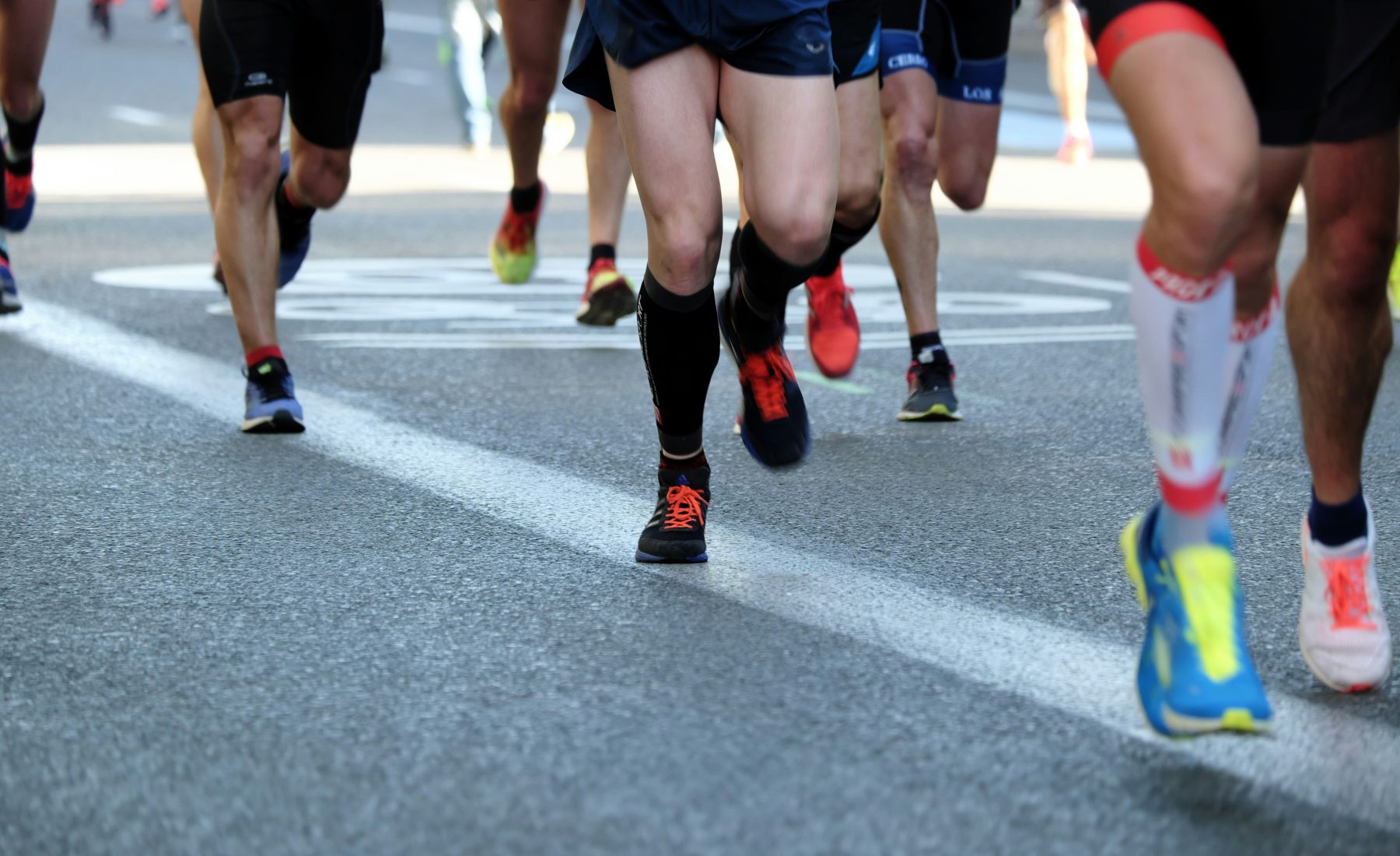
Our sports therapists and podiatrists work with everyone, from amateur park runners to professional athletes.
They’ve coached runners to success. And they know the mistakes that cause injury and prevent them from finishing the race.
In this article, they’ll give you valuable insights and advice on:
Here’s what you need to know before you start the process.
A half marathon is 13.1 miles, or 21.1km.
If you’re planning to run one, you’ll need fitness, endurance and determination.
This will depend on your experience and personal goals. Maybe you’re a beginner, preparing for your first half marathon. Or maybe you’ve run half marathons before and want to focus on achieving a personal best
If you’re a beginner, just completing the course on your first attempt is a huge achievement. But if you can do it within three hours, that’s generally thought of as a solid goal to aim for.
If you’re looking to beat the UK average, it’s currently 2:02:43.
Broken down by gender, that’s 1:55:26 for men and 2:11:57 for women.
If you have your sights on a world half marathon record, here’s what you need to beat.
The men’s half marathon world record is 57:20. It was set by Jacob Kiplimo of Uganda, at the EDP Lisbon Half Marathon, on March 8, 2026.
The women’s half marathon world record is 1:02:52. It was set by by Letesenbet Gidey of Ethiopia, at the Valencia Half Marathon, on October 24, 2021.
Running a half marathon is no easy feat, even for experienced runners. But how difficult you find it will depend on your age, fitness level and experience.
It will also depend on the course and its location. The UK hosts a range of half marathon events. Some of the courses are on flat roads, but there are also more challenging routes with steep climbs and rugged terrains.
If you’re a beginner, attempting your first half marathon, you should be able to run at least 5k before you start your half marathon training.
Here’s what our clinicians recommend before you start training for your half marathon.
Running can be hard on your feet. If you’re planning to run a half marathon, it’s even more important to look after them properly.
A podiatrist can help with any painful hard skin or overgrown toenails to make sure they stay healthy and comfortable. They can also advise you on the best footwear for running.
A sports therapist isn’t just someone who deals with sports injuries. They can help you put together an effective training plan that will work for your physique, lifestyle and fitness level.
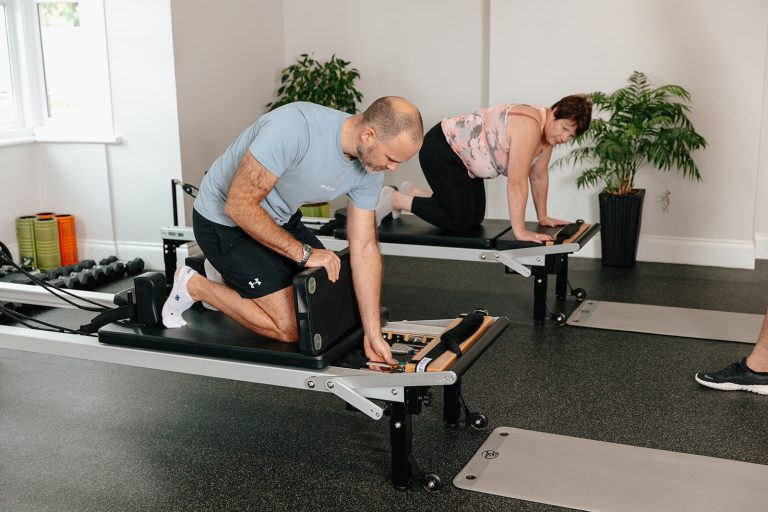
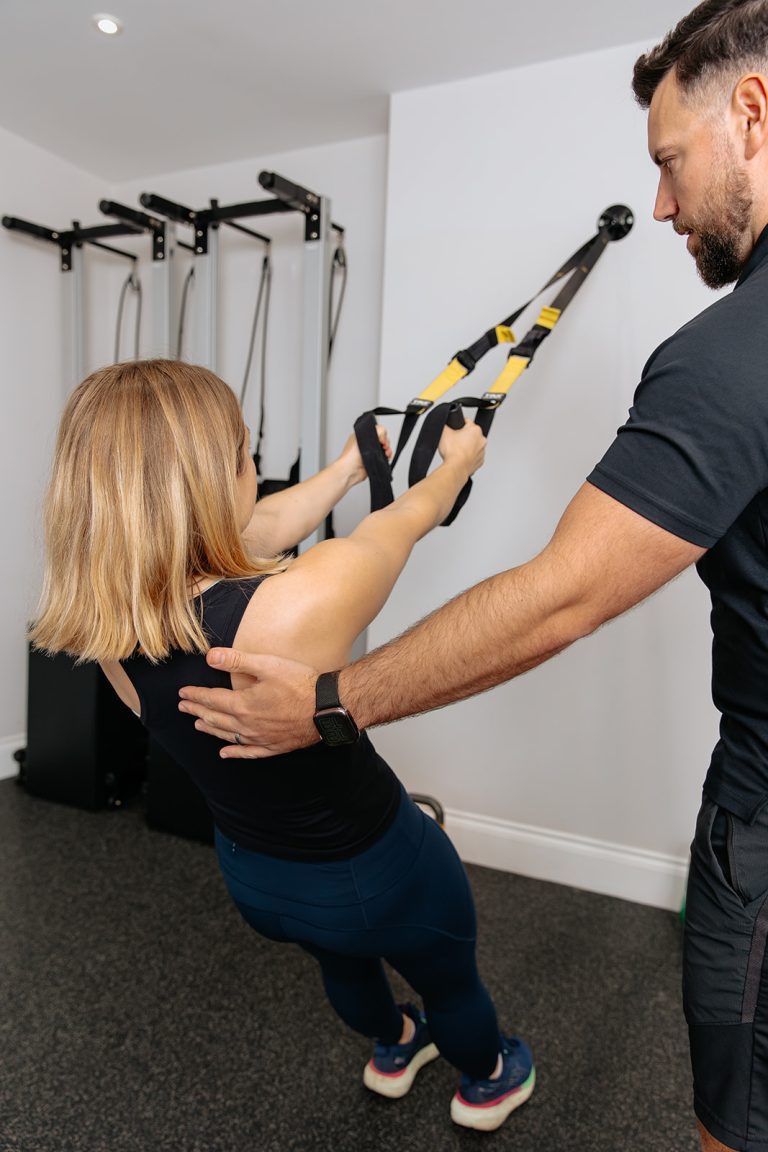
Through targeted Strength & Movement sessions, they can coach you to move better, train more efficiently, improve your technique and reduce your risk of injury.
And they will keep you on-track and motivated until race day.
If you’re preparing for a half marathon, our podiatrists recommend having a running analysis, also known as a gait assessment for runners. This is because having the right running technique is key for preventing injuries and making it to the finish line safely.
The aim of a running analysis is to give you the support you need to improve your performance and achieve your running goals.
It will help you:
Buying an expensive pair of running shoes won’t turn you into an Olympic athlete overnight. But this isn’t a short jog, so you have to be prepared all over — from your headwear to your footwear.
One golden rule: don’t wear anything new on race day. Even if you’ve spent good money on a brand new Nike shirt or some slick Adidas trainers, it’s best to stick with what you’ve been training in and what you know is comfortable.
When you’re running a half marathon, your headwear can support you by:
When buying your half marathon clothing:
For long-distance running, the socks you buy are almost as important as the shoes.
Today’s running socks offer lightweight comfort and durability, with a range of innovative features, including:
Your podiatrist will be able to advise you on which running socks will be best for you.
To run a half marathon, you need shoes that are specially designed for running.
Proper running shoes will give support and shock absorption where you need it, and reduce your risk of injury.
Choose breathable shoes that will keep your feet cool and dry. And make sure they fit well so they provide the best comfort and prevent painful blisters.
Avoid buying pre-worn second-hand running shoes as they will be moulded to the previous owner’s feet.
Our podiatrists recommend the following running shoe brands:
At 13.1 miles, a half marathon isn’t something you can do overnight — unless, of course, you’re a professional athlete. You’ll need a training plan to build up your fitness and stamina, so you can go the distance.
The ideal training time for beginners is between 12 and 16 weeks, so the earlier you start, the better. This will give you enough time to build up your distance gradually and avoid injuries.
Where and how you train is up to you. But when you’re preparing for a half marathon, a training plan is a non-negotiable.
The gym offers treadmills for running practice, weights to work on your strength, and group classes for motivation. This makes it a natural choice for some people.
Others prefer to run outdoors for a more authentic experience that will mirror some of the challenges on race day.
Where you train is up to you, but it should be somewhere you feel comfortable and somewhere you can access easily if plans change.
For some people, a marathon is a personal challenge, they want to take on alone. But for others, having a friend or group to train with can make a big difference.
Training together can make the long runs seem less daunting. And it will give you the advice and encouragement you need to keep going.
Plus, it makes training more fun and social, which can help you stay motivated and committed to your training schedule. Have a look on social media for local running groups in your area, or reach out to a friend.
If you want to complete the half marathon, having a proper training plan, with realistic goals and steady progression, is vital.
Create a training plan that’s aligned with your individual needs and fitness level — and make sure you stick to it. Set time aside each week for running, especially different types of runs, like long runs, interval running, and speed work.
When you’re training for a half marathon, you need to consider your whole body, including your muscles and joints. Here’s what our sports therapists recommend to help you train safely and avoid injury.
If you expect to run the half marathon in a certain time from the get-go, you’re just setting yourself up for failure. Instead, look at what you want to achieve and set a target you could realistically accomplish — even if you have to put in extra work. Try using the SMART method to set your goals.
If you’ve run a half marathon before, you may already know which areas you need to focus on to beat your previous time.
But if this is your first half marathon, try not to focus too much on the time, as this will only put unnecessary pressure on you. Instead, work hard to improve on your distance, regardless of how long it takes you.
Each training session should begin with light cardio and stretching. This warms up your muscles and increases their flexibility, so you’re less likely to get cramps, spasms, strains or tears.
The length of your warm-up will depend on the training you have planned, but will typically be around 10-30 minutes.
The best form of warm-up is a RAMP warm-up, which your sports therapist can build with you in mind.
Strength training
Research shows runners benefit from heavy resistance training. The most effective training uses a high-load, low-rep approach to improve performance, sprint ability, running endurance, and fatigue resistance.
This training can be even more effective when combined with plyometric exercise.
Training for a half marathon involves a lot of running — and running is a high-impact activity, which puts extra stress on your joints. It can increase your risk of musculoskeletal injuries and of old injuries flaring up.
This is why our sports therapists recommend supplementing the high-impact running with low-impact cross training. This gives you the aerobic exercise you need to build your fitness and stamina, without the stress on your body.
When you’re preparing for a half marathon, the best cross training exercises are those most similar to running, such as deep-water running, elliptical training and cycling. Swimming also counts as cross training, but may not be as effective.
Interval running is best for more experienced runners who want to improve their pace.
This type of running switches between intervals of intense running (exertion) and light jogging (recovery). It helps to improve your aerobic capacity and stamina, allowing you to run at a faster pace for longer.
Your sports therapist will be able to advise you on the timings and number of reps you should be doing.
You should aim to complete one long run once a week.
If you’re a beginner, you might want to start with shorter distances, like 4 or 5 miles —which may be the furthest you can run. Then, every week or two, add an extra mile to build up your endurance.
Adding more miles gradually will allow your body to adapt to the increased distance and help prevent injuries.
The cool-down takes around 4-10 minutes at the end of your training session. It typically comprises a mix of light cardio, like walking, and stretching out the muscles you’ve been using.
This allows your body to gradually return to its resting levels and normal temperature. It also helps to reduce stiffness and muscle soreness after exercise, so you can stick to your training plan.
From your first training session to the finish line, recovery is just as important as the training itself. Make sure you include rest days in your training plan, so your body has time to recover and repair.
If your muscles become sore, a sports massage treatment can help to relieve the pain and help you recover more quickly.
After the marathon, make sure you listen to your body and give yourself the time you need to rest and recover fully.
A trial run takes away the pressure and allows you to really get a feel for what it’s like to run the distance. Use trial runs as an opportunity to experience the physical aspect and the mental one.
Even if it takes you much longer than you expected, knowing that you are able to run the distance is a great way to reinforce your confidence and mental strength. Don’t worry if your trial run doesn’t go as planned — use it as a learning experience to make adjustments and improvements for the actual day.
You should plan your trial run to allow at least two weeks of recovery before race day.
Some final words of wisdom to help you on your way.
If you have a pre-existing health condition, and you’re not working with a sports therapist, it may be advisable to speak to your GP before you start your training.
Dehydration has a major effect on your body, causing muscle cramps, fatigue, and even heat stroke. That’s why it’s so important to stay hydrated throughout your training, especially on long runs.
You should be drinking water before, during, and after your runs. So carry a water bottle with you, or plan out routes where you can stop for a drink.
Good hydration is vital, but it’s also about fuelling your body and eating the right foods. There are plenty of online diets and meal plans specifically tailored for marathon runners, so do some research and find what works best for you.
Remember, it’s a marathon, not sprint. Some people think that speed is everything when it comes to running, but a half marathon is more about endurance.
If you can run a mile in 8 minutes, that doesn’t mean you can run 8 miles in 64 minutes.
Sure, some people can also master the speed, but if it’s your first run and you’re sprinting from the start, you’re much more likely to burn out quickly.
Be patient and start off at a comfortable pace, gradually increasing your speed as you go along. But remember to leave something in the tank for the final stretch.
One thing beginners sometimes do is weave in and out of the other runners, trying to keep up with them. Don’t worry about other people’s pace, focus on your own and run at a speed that feels right for you.
Hatt Clinic serves Wiltshire and Somerset, with clinics in Devizes, Frome and Marlborough.
Our expert clinicians can give you the support you need to train with more confidence and achieve your half marathon goals.
Our foot care specialists will help by making sure your feet are healthy and comfortable.
You can book your initial chiropody/podiatry appointment by visiting our online booking page.
Our sports therapists can provide an initial consultation to assess your fitness, taking into account any previous injuries. They can then help you create an effective training plan that’s tailored for your physique, lifestyle and fitness level.
To book your first appointment online, go to our online booking page and choose initial sports therapy from the menu.
Our Strength & Movement training classes will give you the coaching you need to move better, train more efficiently, improve your technique and reduce your risk of injury. So, when it comes to race day, you’ll feel more prepared, confident and capable.
For your initial 1:1 appointment, visit our online booking page and select Strength & Movement 1:1 from the menu.
Following this appointment, you’ll be able to choose our group classes or continue on 1:1 basis.
Sports massage can help relieve sore muscles and speed up your recovery after training.
To book a sports massage, visit our online booking page and choose initial massage and manual therapy from the menu.
Alternatively, you can email us at: enquiries@hattclinic.co.uk
Or call your nearest clinic:
Devizes: 01380 730473
Frome: 01672 516580
Marlborough: 01373 452604
Hatt Clinic
January 17, 2020
Hatt Clinic
October 31, 2017
Hatt Clinic
April 07, 2017