
Hatt Clinic
April 07, 2017
September 27, 2017
Updated December 29th, 2025
In this article, our expert podiatrists answer your questions about podiatry, foot issues and foot care advice.
A podiatrist is a medical professional who diagnoses, treats conditions affecting the feet and ankles.
Your podiatrist can help with things like:
We can also advise on footwear and provide routine foot care.
There’s no difference. They’re both titles used by medical professionals who deal with feet.
Chiropodist is an older term, while podiatrist has become more widely used and is recognised internationally.
Yes, if you have concerns about your feet or ankles, you can go direct to a podiatrist without a GP referral.
Podiatrists specialise in foot and ankle conditions. They’ll be able to offer an expert assessment and recommend a treatment plan to help you with your condition.
In most cases, a podiatrist can fully manage your condition. However, in some cases, they may need to refer you to another health professional such as a physiotherapist or your GP.
It depends on your individual needs and foot health.
Some people only visit a podiatrist when they have an issue. Some enjoy regular medi-pedis to keep their skin and toenails healthy. If you have an ongoing issue, you may need an appointment every few weeks.
If you have an issue, your podiatrist will start by asking you about your symptoms and medical history. They’ll then examine your feet and, if necessary, the way you’re walking. This will help them determine what the issue is and recommend appropriate treatment.
Treatments might include:
Yes, if the podiatrist is qualified, registered as an independent prescriber and it’s within their scope of practice. They’ll be able to prescribe medications that are relevant to foot care, such as antibiotics, antifungals and painkillers.
If you need a different medication, your podiatrist can make a referral to your GP or another specialist.
Yes. Making sure your feet are properly aligned will improve your posture, reduce discomfort when walking, and prevent musculoskeletal pain in other areas of your body.
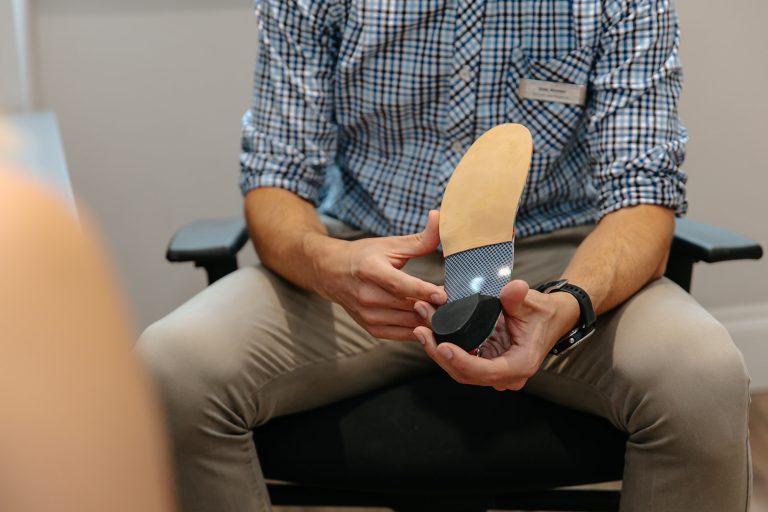
A podiatrist will analyse your gait and do a biomechanical assessment. Based on the results, they can offer corrective measures such as orthotics, exercises, foot taping and footwear recommendations.
Yes. If you have diabetes, it’s important to get your feet checked regularly. This can help you avoid any complications.
Podiatrists can help with things like circulation checks, sensation testing, toenail care and treatment of wounds. They can offer advice on footwear, routine foot care and reducing the risk of ulcers. And they can provide custom orthotics to prevent painful pressure sores.
Yes. Athlete’s foot is a contagious fungal infection. It most commonly causes itchy, raw patches of skin between the toes, but can also affect the soles or sides of your feet.
A podiatrist can help by diagnosing the condition and recommending/prescribing anti-fungal medications to treat it.
It’s important to get treatment for the infection as soon as possible. If left untreated, the infection can spread to your toenails and cause a fungal nail infection.
Yes. Seeing a podiatrist is often the best way to get the infection treated.
Treating fungal nail infections can be a long process. If you’re using over-the-counter medications that you apply to your nails, it can take 6-12 months before you see any improvement.
If these treatments don’t work, your GP can prescribe anti-fungal tablets, but these can have side effects and aren’t suitable for everyone.
Some podiatrists have access to quicker, more advanced and more effective treatments you can’t get from the pharmacy or your GP. These treatments penetrate into the nail to target the infection more directly.
Hatt Clinic uses a fungal nail treatment called Clearanail.
Gout is a form of arthritis. The main symptom is sudden and severe joint pain — usually in your big toe. The joint swells and the skin becomes red and hot.
Leaving the condition untreated can cause damage to the joint. And it could mean any future attacks last longer.
Gout medication is usually prescribed by a GP, but a podiatrist will be able to diagnose the condition and help you manage the symptoms.
Most people who need professional nail care see their podiatrist every 6-8 weeks.
Keeping your toenails trimmed and cared for correctly is key to keeping them healthy. But you might find this difficult — especially if you can’t reach your feet easily. You might also need some help if you have thick nails, or a condition like diabetes.
There can be a number of reasons for sore or painful feet.
For example:
To identify the cause, your podiatrist will ask you about your symptoms and examine your feet. They can then give advice, offer appropriate treatment or refer you to another specialist, if necessary.
Foot odour is usually caused by sweat mixing with the bacteria on your skin. If you sweat excessively or wear certain kinds of footwear, this can make it worse.
Maintaining good foot hygiene, wearing natural socks, and choosing well-fitting, breathable footwear can help. Your podiatrist can give you more personalised advice, if you need it.
Excessive sweating could be genetic or linked to stress hormones. It could also be due to synthetic socks or shoes that don’t let your feet breathe.
Your podiatrist will be able to recommend suitable foot care and treatments such as powders and anti-perspirants. They can also suggest footwear and lifestyle changes that could help.
Itchy feet can have a variety of causes, such as:
A podiatrist will be able to determine the cause and recommend a suitable treatment or arrange a referral.
Cracked heels are usually caused by dry, thickened skin. But they can also be linked to open-backed shoes, standing for long periods and certain skin conditions.
A podiatrist will safely remove any hard skin and recommend a suitable moisturiser to help prevent the problem from recurring. They can also give you any more specific advice you might need.
Recurrent ingrowing toenails could have a number of causes.
For example:
A podiatrist can treat your ingrowing toenail for you and offer advice or additional measures to prevent it from growing back.
A blackened toenail is usually a sign of bruising under the nail. This could be from pressure or trauma, like an injury.
You should get it checked if the toenail is painful, if you can’t remember injuring it, or if the nail looks infected. A podiatrist can make those checks and offer advice and/or treatment.
Please don’t let embarrassment stop you from getting the care and treatment you need.
Foot conditions are common, many people have the same issues as you, and your podiatrist will have seen them all before.
We’re here to support you and to help improve your comfort, mobility and confidence — not to judge.
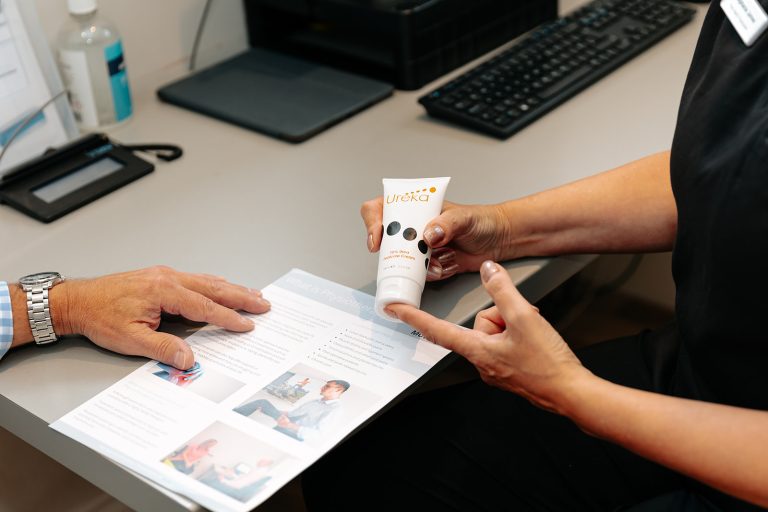
At Hatt Clinic we recommend Ureka cream, which is carefully formulated to care for and hydrate dry skin. Applying the cream regularly will help keep your skin smooth and supple.
Ureka cream contains urea which is an important component of the body’s natural moisturising factor (NMF). It also has anti-bacterial and antiseptic qualities to keep your skin healthy.
We recommend the 10% strength cream for general dry skin conditions and 25% for more severe cases of dry skin. You can purchase this cream at the clinic when you come in for your appointment.
To keep your feet comfortable and healthy, you should look for shoes that:
If you have a foot issue or would like to learn more about the benefits of professional foot care, our expert podiatrists can help.
We offer podiatry at all three of our clinics, in Devizes, Frome and Marlborough.
To book an appointment online, visit our online booking page and select initial chiropody/podiatry from the menu.
Alternatively, you can email us at: enquiries@hattclinic.co.uk
Or call your nearest clinic:
Devizes: 01380 730473
Frome: 01672 516580
Marlborough: 01373 452604
Hatt Clinic
April 07, 2017
Hatt Clinic
May 01, 2026
Hatt Clinic
April 07, 2017